

Gama spoke to Fabio Cordella, Chief Executive Officer at Fabio Cordella Group.

Read this Industry Insight in the next issue of Gama News.
What inspired the founding of the Don Fabio Cigars brand, and how do you incorporate your winemaking heritage directly into the production process in Honduras?
Don Fabio Cigars was born from my experience and background as a wine producer. We did not simply decide to commercially associate two products from the luxury world, wine and cigars; we wanted to create a genuine connection between these two worlds directly within the production process.
Our cigars are handcrafted in Honduras in collaboration with Guillermo Rico and Tabacalera Gran Habano, using a carefully selected blend of tobaccos from Honduras, Nicaragua, Ecuador and Colombia.
However, what I consider to be the truly distinctive element is our unique tobacco processing method.
 After our wines are removed from the barrels, some of the barriques previously used in our winery are dedicated to the tobacco process. The tobacco is placed inside these barrels, which still retain the aromas and characteristics of the wine, and during the process we periodically add our own wine as well.
In this way, we are not simply suggesting that consumers pair a fine wine with a cigar: we have created a genuine point of connection between the two products during the production process itself.
This concept was born from my experience in the wine industry and from my desire to transfer part of our winemaking identity into another artisanal product that I am deeply passionate about.
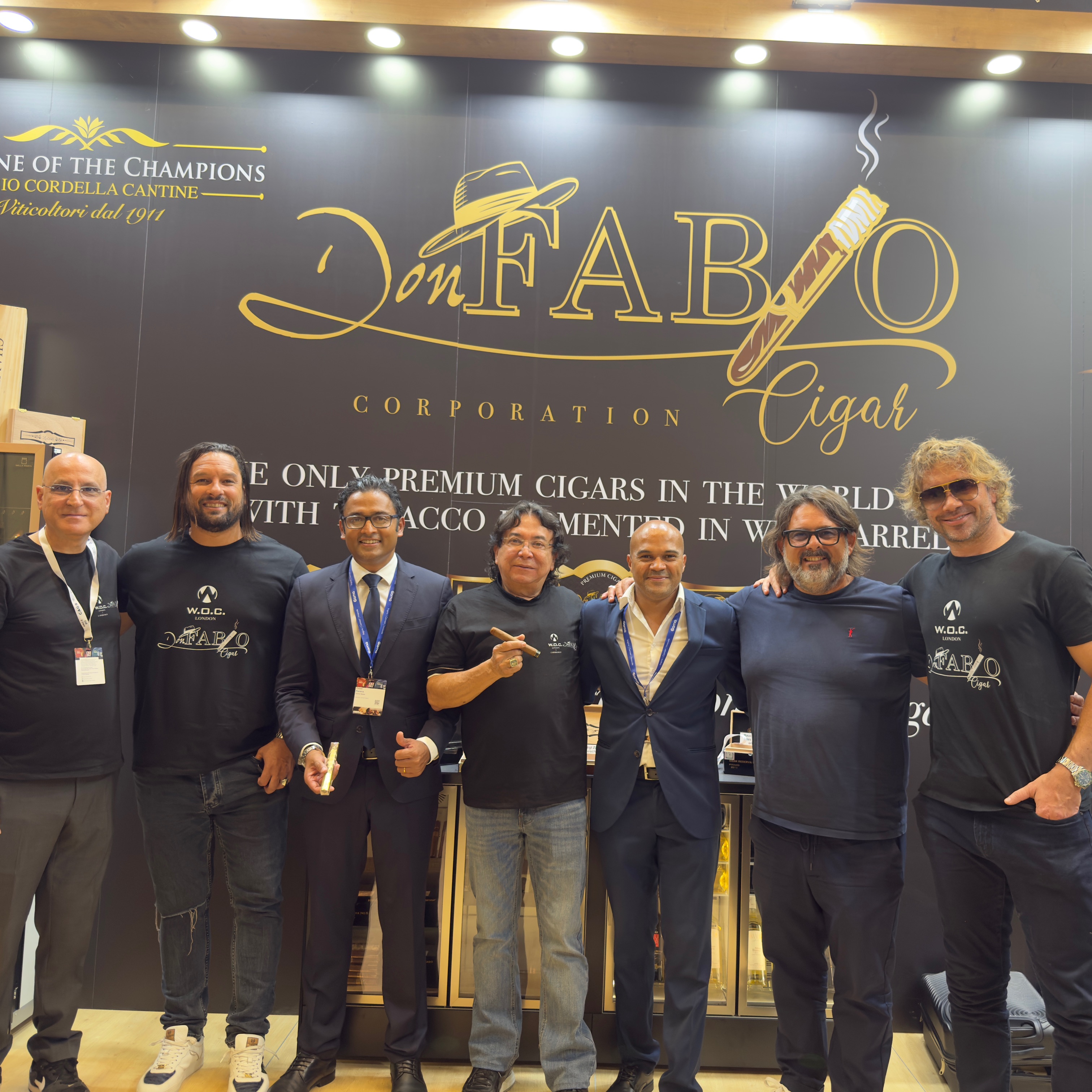
Gama and Don Fabio Cigars: chief executive Fabio Cordella with partners Guillermo Rico, Amauri and Diego Lugano
Over the last decade, high-end consumers have shifted from simply collecting standalone luxury products toward seeking immersive, cross-category rituals, such as pairing fine wines with boutique cigars. How are consumer expectations changing around these lifestyle rituals, and why do crossover concepts (like barrel-aging tobacco in wine casks) resonate so strongly with today’s luxury consumer?
High-end consumers no longer view luxury items in isolation; they are seeking complete sensory experiences and authentic stories. Pairing fine wine with hand-rolled cigars is an age-old tradition, but modern connoisseurs want a deeper connection between the two. Crossover techniques like fermenting tobacco leaves in our Cordella wine barrels create a natural bridge between two distinct artisanal worlds. It resonates because it offers the consumer a multi-layered story of craftsmanship, where the oak, wine notes and aged tobacco unite into a unique, memorable ritual rather than just a transaction.
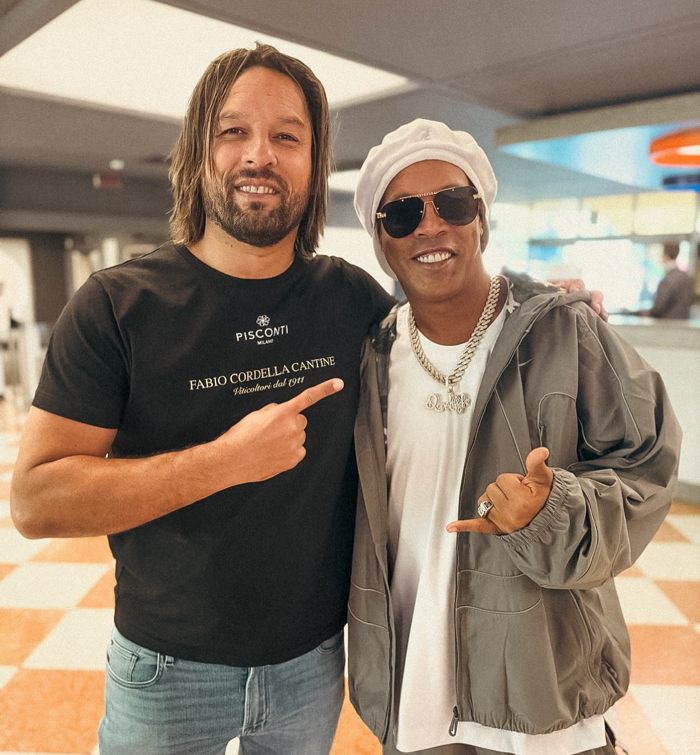
Fabio Cordella Cantine with Amauri and Ronaldinho Gaúcho at Vinitaly 2025.
Across both the wine and premium cigar sectors, the market is flooded with brands claiming ‘artisanal’ heritage. What key trends are you observing regarding how discerning consumers evaluate true craftsmanship versus clever marketing in today’s market?
The modern luxury consumer is far more educated and discerning than ever before. They look beyond glossy branding to evaluate true origin, soil quality, fermentation time and meticulous production methods. In both winemaking and premium tobacco blending, you cannot shortcut time or shortcut nature. True craftsmanship reveals itself in consistency, balance and patience. Consumers are increasingly drawn to low-yield, transparent producers who can prove their heritage and demonstrate genuine mastery of their craft from seed to final product.
The global definition of luxury has transformed significantly, moving away from traditional status symbols toward mindfulness and the luxury of ‘slowing down’. How do traditional lifestyle categories like fine wine and hand-rolled cigars fit into the life of the modern consumer?
In today’s hyper-connected, fast-paced world, time has become the ultimate luxury. Fine wine and premium cigars naturally align with this shift toward mindfulness because their consumption cannot be rushed. Crafting a cigar or producing a vintage wine takes years, and enjoying them requires an intentional pause. They provide a deliberate opportunity to disconnect, step back from daily noise, and create memorable moments of relaxation and conversation, which is precisely what today’s luxury consumer values most.
| FUTURE LEADERS |
| Never compromise on quality, and stay deeply committed to authentic storytelling. In the luxury space, consumers immediately sense when a brand lacks real substance. You must build your foundation on exceptional craftsmanship, uncompromising standards and clear brand identity. Beyond the physical product, luxury is built on emotional connection and trust. If you focus on genuine passion, build authentic relationships and remain patient, the market will recognise and respect the true value of what you have built over time. |


