

Read this Tradeshow Insight in the next issue of Gama News.
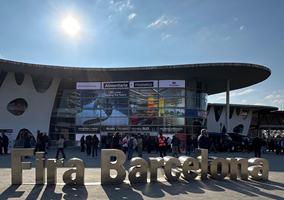
Alimentaria 2026, held in Barcelona from 23rd to 26th March, marked its 50th anniversary this year as a premier global platform for the food, beverage, and foodservice industries.
This edition, staged at Fira de Barcelona’s Gran Via venue, successfully integrated with Hostelco to cover the entire hospitality and catering value chain. The event concluded with a total of 109,600 professional visitors, approximately 25% of whom travelled from 120 different countries, including significant contingents from the USA, Europe, and Latin America.

Gama with Tomás Fuertes, President and Rafael Fuertes, Director General, ElPozo
With an exhibition space covering 100,000 sq m, the fair hosted more than 3,300 exhibiting companies. A notable feature of this anniversary edition was the record-breaking international participation: 1,200 firms from more than 70 countries were present, representing a 30% increase in international exhibitors compared to the 2024 edition. This growth was further reflected in a 40% expansion of the exhibition space dedicated to international stands. Poland served as the Country of Honour, occupying a 1,200 sq m pavilion to showcase its traditional agriculture alongside modern industrial developments, particularly from the Swietokrzyskie and Lodzkie regions.

Gama with Anna Canal, Director of Alimentaria
The show’s layout across seven pavilions facilitated over 14,500 business meetings between participating firms and a group of 2,700 invited buyers and importers (1,500 international and 1,200 domestic). The Horeca sector emerged as a major growth area, expanding by 40% to include more than 600 companies specifically focused on foodservice and hospitality equipment. While domestic participation remained strong with 2,000 Spanish companies, the distribution of exhibitors shifted; smaller regional enterprises were concentrated in the “Lands of Spain” pavilion, while larger manufacturers were grouped by category in sectors such as Intercarn for meat and Interlact for dairy.

Gama with Chef Riccardo Radice and Chef Quique Medina, Fishology Foods, 2026 Horeca Award Winners
Innovation was a primary focus throughout the event, with the industry moving towards healthier solutions and reduced environmental impact. Sustainability evolved from basic plastic reduction to resource regeneration through upcycling. A prominent example was the development of savoury snacks made from bagasse, the spent grain leftover from the brewing process. Other eco-conscious developments included compostable and carbon-neutral packaging and new production methods like “dry fractioning” to lower water usage. The health trend saw a transition towards bioactivity and functional foods, such as antioxidant-rich broccoli sprout powder and 3D-printed snacks tailored with precise doses of vitamins for specific groups like athletes. Clean labelling also gained ground, with traditional fermentation used to replace synthetic additives.

HM King Felipe IV of Spain with Alimentaria’s leadership team
The show floor displayed a clear interest in global flavour profiles and protein-rich formats. ‘Dubai-style’ products, characterised by pistachio and kunafa fillings, were widely observed in chocolates, spreads, and bakery items, while authentic tastes from Malaysia, South Korea, and Brazil also gained prominence. Snacking formats continued to diversify, with high-protein options like chips made from dehydrated egg whites and convenient pouch-packaged desserts becoming more prevalent. The melding of technology and nutrition was also evident in the application of artificial intelligence to identify new flavour combinations and optimize clean-label recipes.
The next edition of Alimentaria and Hostelco is scheduled to take place at Gran Via from 20th to 23rd March 2028.
*Gama was proud to be a media partner of Alimentaria 2026 and we look forward to our ongoing collaboration.*
Image source: Gama


